Hackathon numbers are usually self-reported. For ETHGlobal Lisbon, we read the repos: 67 projects, 85% with verified 0G integration, and 9 winners across three tracks.
Most hackathon recaps run on the honor system. Teams tick a sponsor checkbox at submission, sponsors count the checkboxes, and everyone moves on. Nobody opens the repos.
At ETHGlobal Lisbon 2026, held July 24-26 at Pavilhão Carlos Lopes, we opened them. All 67 projects that submitted to 0G's prize tracks went through a repo-level integration review on top of a mandatory live demo. The result: 57 of the 67, or 85%, had meaningful 0G integration sitting in their code. Every percentage in this recap traces back to a commit, not a checkbox.
Here is what the repos told us, the numbers behind the event, and all nine winners.
By the numbers
ETHGlobal's official numbers: 382 hackers from 116 cities and 47 countries, building for 36 hours at Pavilhão Carlos Lopes. The 0G slice of that:
- 67 projects submitted to 0G prizes
- 115 builders across those teams (1.7 per team on average), roughly 3 in 10 hackers on site
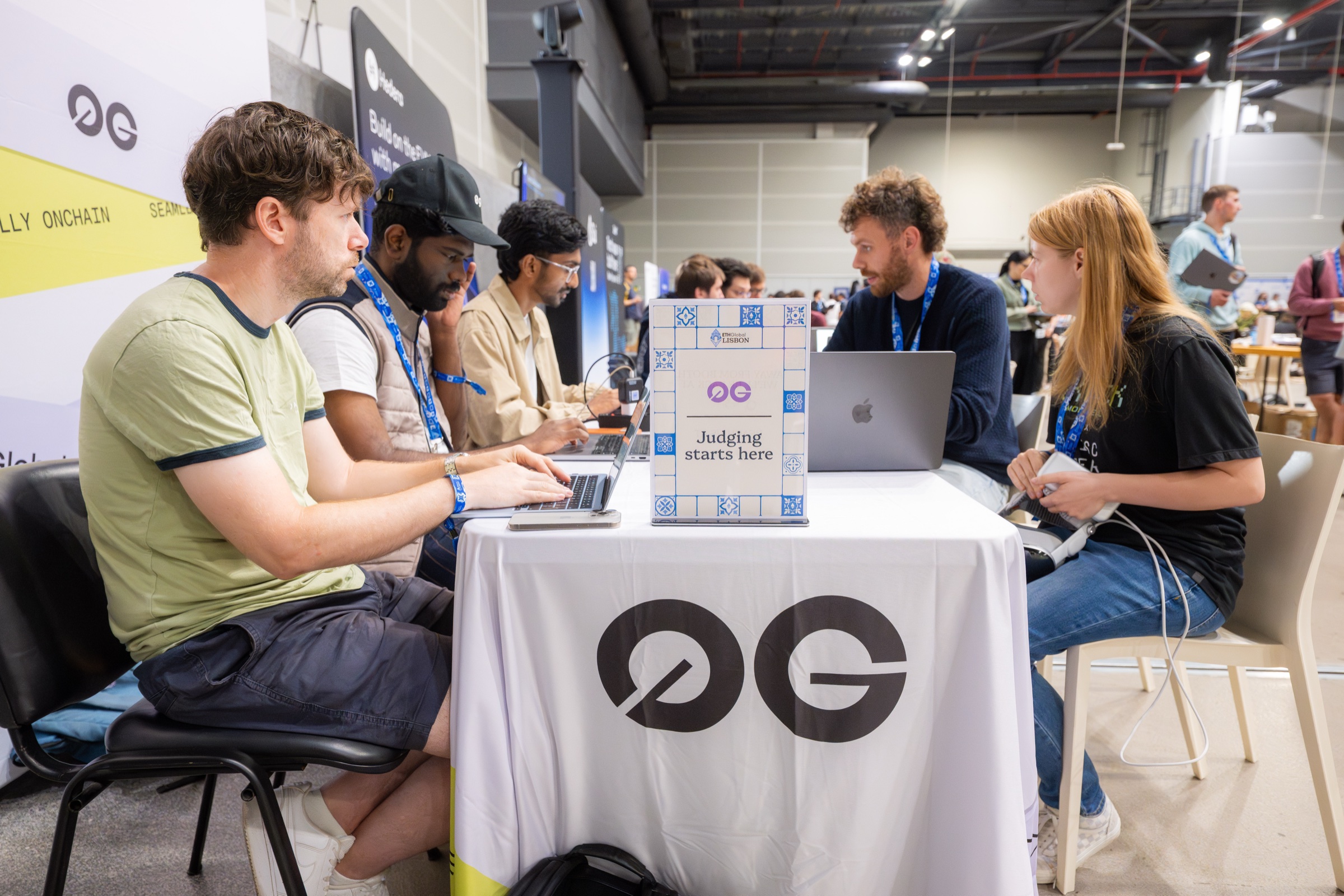
- 49 projects (73%) demoed live to judges
- 57 projects (85%) with repo-evidenced 0G integration
- $15,000 in prizes across three tracks, 9 winners
- 8.1/10 average developer experience rating, self-reported by teams
- 52 teams built from scratch; 15 continued earlier 0G projects
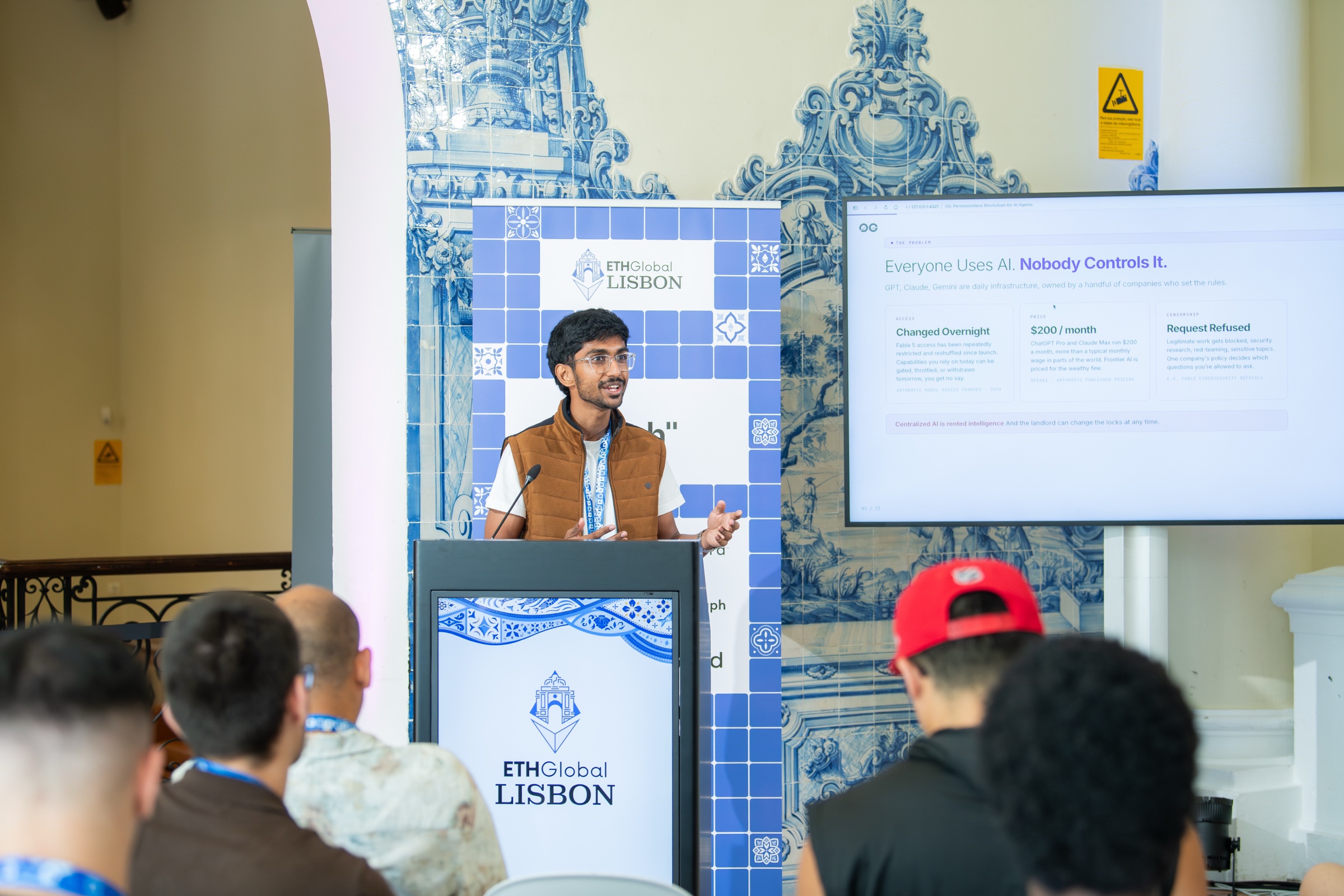
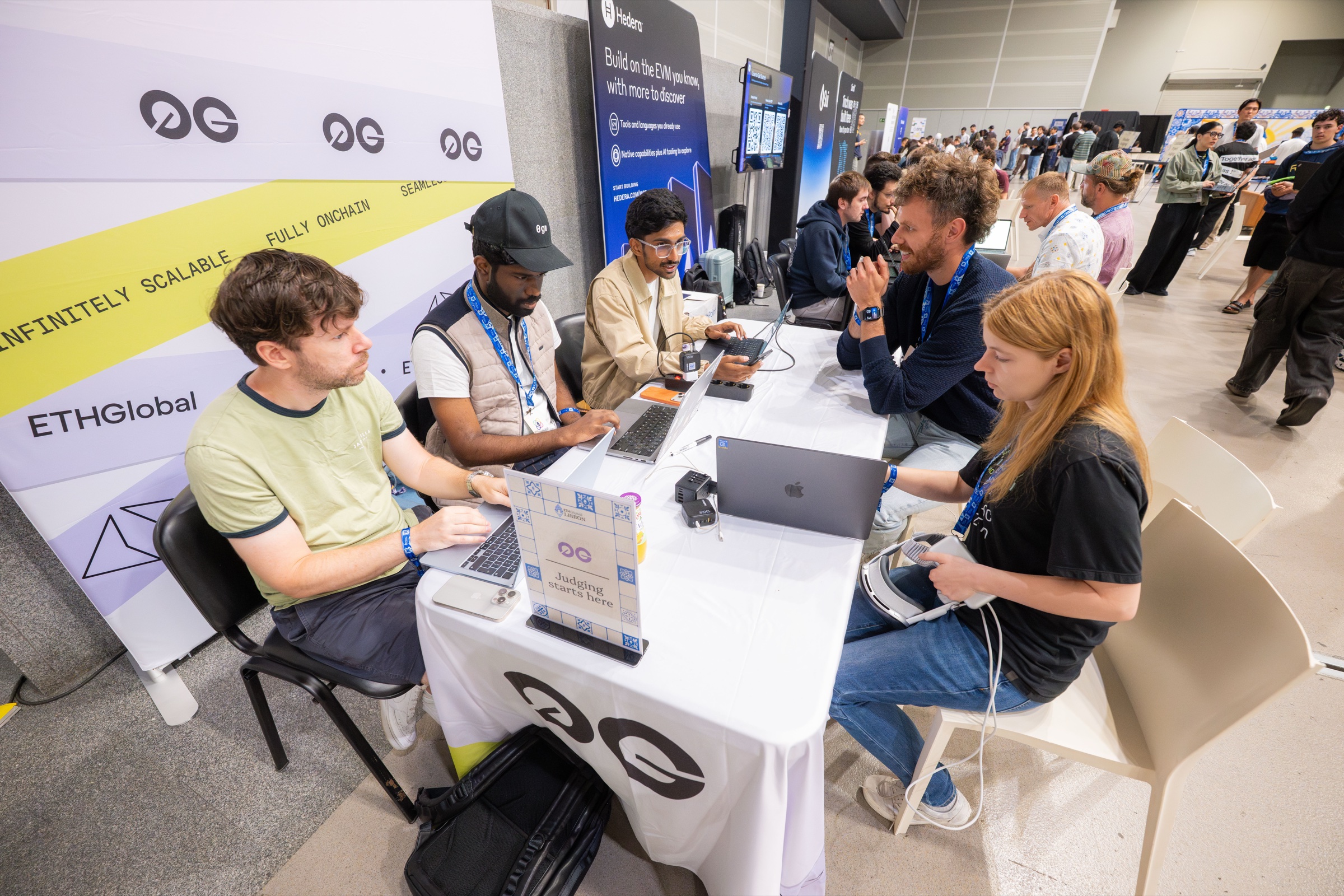
0G was on the ground all week, not just for the hackathon. Gathin T from 0G DevRel opened day one with our partner workshop, "0G: Permissionless Blockchain for AI", and served among the event's judges, speakers, and mentors. Then came 36 hours of building, 49 live demos, and a judging pass that read source code the way an auditor would.
The week around the hackathon
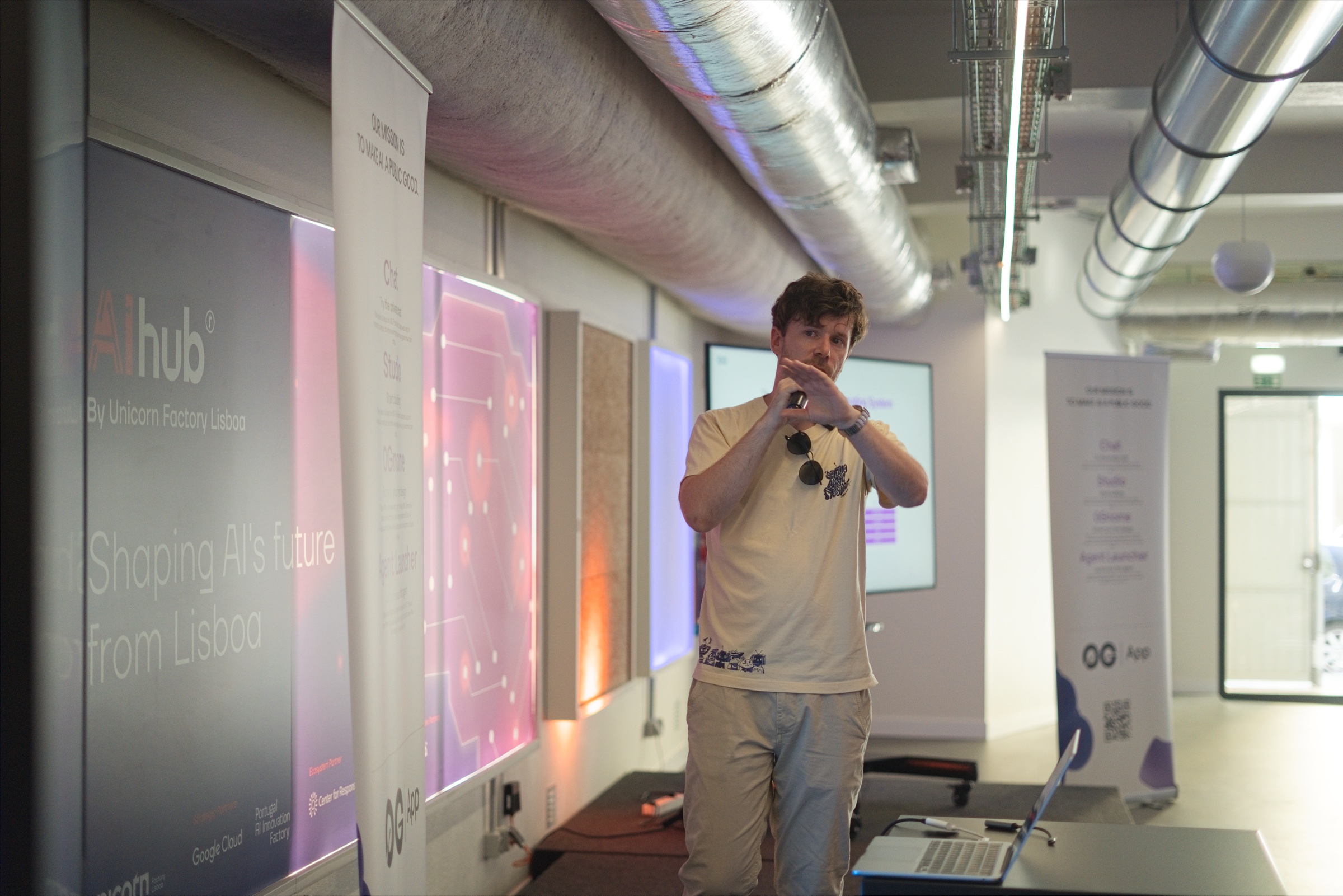
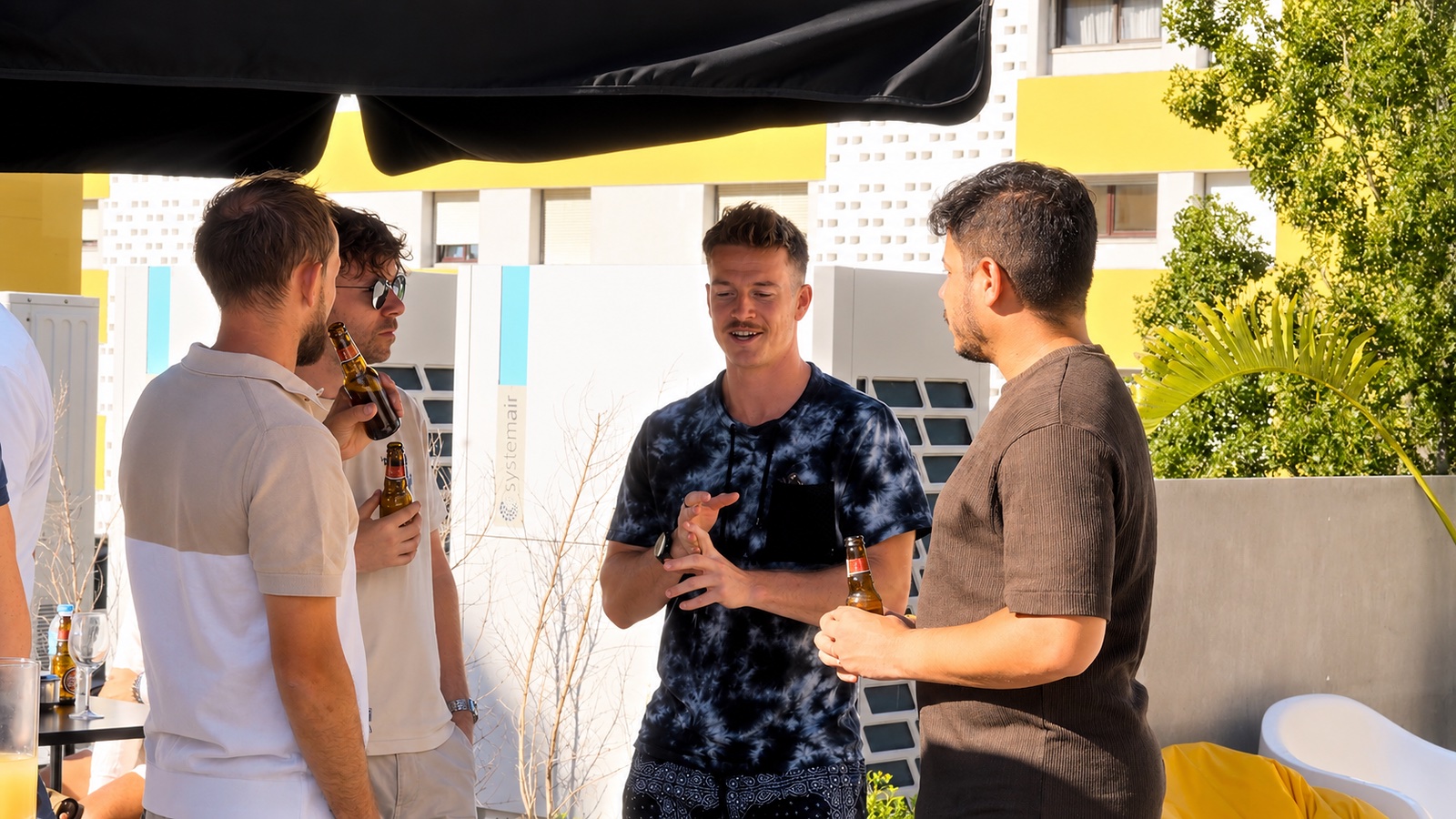
Two days before hacking started, we hosted House of AI: Demo Day at The AI Hub in Lisbon on July 22. Builders demoed what they had been creating on 0G, and the evening moved up to a rooftop networking social with founders, developers, and investors working on AI and autonomous agents.
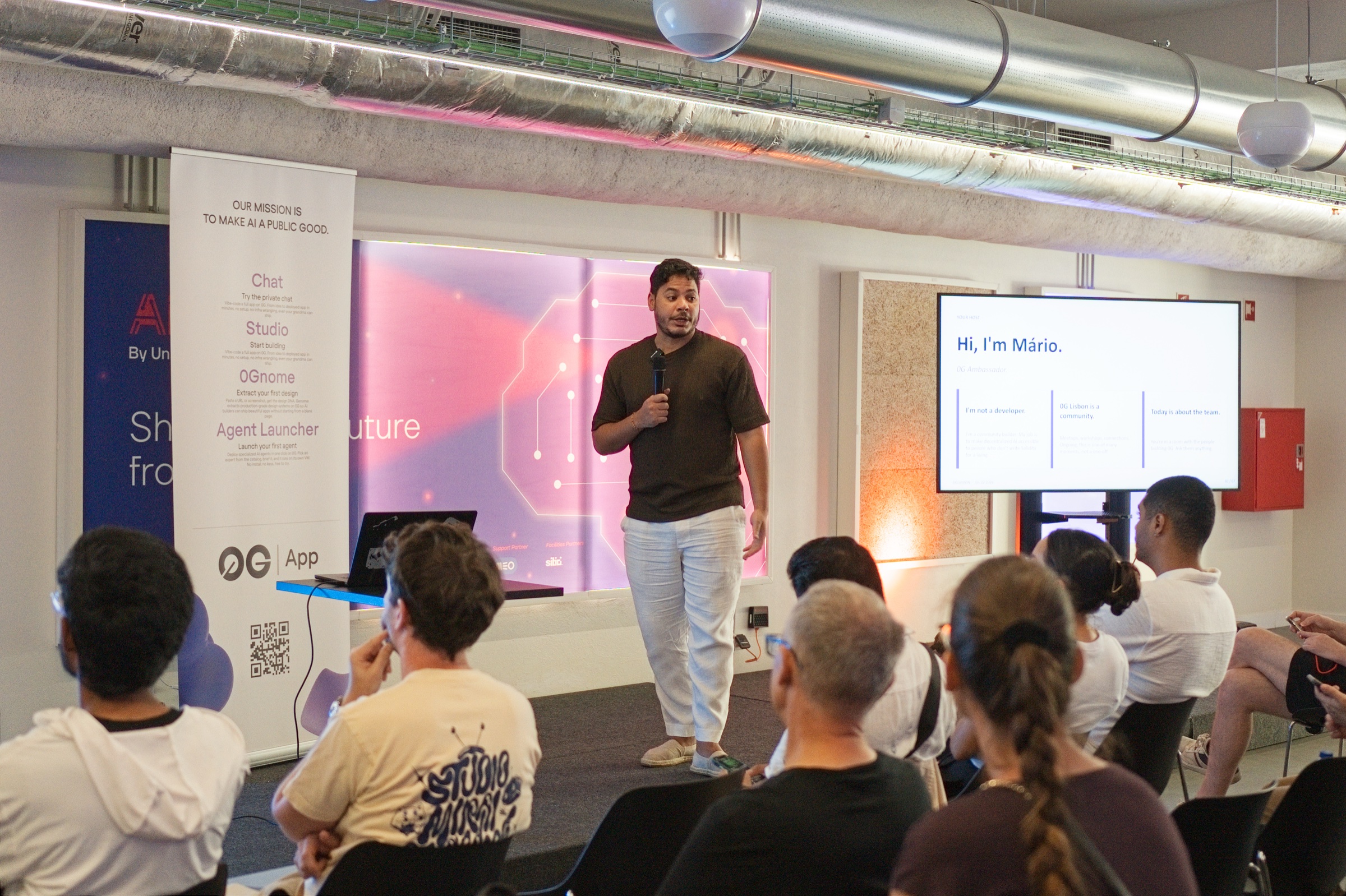
Demo Day also had a launch inside it: Mário, 0G's Lisbon ambassador, introduced the 0G Lisbon Hub, a local builder community running meetups, workshops, and founder gatherings that keeps going long after ETHGlobal wraps up. He then spent the hackathon weekend on the ground supporting teams.
The next day we co-hosted Onchain Builders Day, ETHGlobal's relaxed hacker gathering at Cobaia during Onchain Lisbon Week, and then the main event opened its doors at Pavilhão Carlos Lopes.
The stack got used as a stack
The most common story a sponsor tells after a hackathon is API adoption: teams called our endpoint, here is the count. Lisbon gave us something better. Teams composed multiple 0G layers into single products.
Across the 67 submissions, repo review found:
| Component | Share of submissions |
|---|---|
| 0G Compute | 82% (55 projects) |
| 0G Storage | 67% (45 projects) |
| Agentic ID (ERC-7857) | 46% (31 projects) |
| 0G Chain | nearly half (~43%) |
Compute leading makes sense: verifiable AI inference is the reason most of these teams picked 0G. The surprise is 0G Storage as a clear second layer. Builders used it for what our track design intended: persistent memory for agents, encrypted run histories, content-addressed skill packs. Agent memory that survives the demo.
The first-place winner, 0run, shipped all four components in a single product.
The repos knew more than the forms
Here is the finding we did not expect. When we compared what teams wrote in their submissions against what their repositories contained, teams under-reported their own integrations. Repo review found more 0G Storage and Agentic ID usage than the write-ups claimed.
The explanation is mundane and kind of great: starter templates and docs quickstarts wire these components in before a team ever thinks about what to put on the form. The infrastructure did its job quietly enough that builders forgot to take credit for it.
The winners
Nine teams took home a share of the $15,000 pool across three tracks. Judging combined live demos with repo-level review, which kept the pool honest and the wins earned.
Best AI Product on 0G
🥇 0run (project page)
An AI running coach athletes actually own. Each coach is an Agentic ID (ERC-7857) on 0G Chain, with encrypted run memory on 0G Storage and TEE-attested reasoning on 0G Compute. The full-stack winner.
🥈 Hands Unchained (project page)
A remote labor market for robot training. Verified humans teleoperate real robots, and a TEE-attested model on 0G Compute grades each training episode before payment clears.
🥉 KOLlateral (project page)
A public, verifiable track record for crypto influencers. Calls become structured trade signals scored with TEE-attested inference on 0G Compute, so losing calls cannot quietly disappear.
Best Infrastructure & Tooling on 0G
This track drew the smallest pool, 10 submissions, and produced the strongest winner cohort of the event. A smaller, more serious builder segment showed up for tooling.
AEGIS (project page)
A non-custodial policy layer for agents that move money. Each protected agent gets an Agentic ID, and every spend verdict is TEE-backed through 0G Compute. User rules plus Safe 2-of-3 authorization mean an agent cannot spend alone.
Superpose (project page)
An AI risk manager for shared-collateral DeFi. 0G Compute proposes, an onchain guard controls execution, and 0G Storage records the learning lineage.
Lortnoc Tahc (project page)
Private messages disguised as ordinary Telegram small talk. 0G Compute selects natural cover text, while anonymous membership lives on 0G mainnet.
Keep Building on 0G
Happy Hour (project page)
A happy-hour discovery app with receipt-based loyalty cards. Every approved punch is granted by 0G Compute inference inside a TEE and stored with a checkable attestation.
Orloj Finance Agents (project page)
Turns verified smart contracts into agent-ready MCPs. Agents run on 0G Compute, and reusable skill packs live as content-addressed blobs on 0G Storage.
NpmGuard (project page)
AI agents that audit npm packages for malicious code and publish verifiable results onchain, with independently verified TEE signatures.
The continuity bet paid off
Lisbon was the first ETHGlobal event where teams could bring an existing repo instead of starting from an empty one. We designed a track for exactly that: Keep Building on 0G, for teams continuing projects they started at earlier events.
Fifteen projects came back to keep working on 0G, and three of them won. The pipeline from earlier events is clearly alive. It is the same builder motion we have been running event by event, from EthCC Cannes to the 0G APAC Hackathon, and Lisbon is where returning teams got their next iteration judged.
The pipeline has a next stop. The 0G Horizon Accelerator, run with HackQuest, is open for applications: a five-day Founder House, mentorship from the 0G team, and demo slots at 0G Dev Day and Token2049 Singapore. Keep Building winners know where the door is.
What Lisbon proved
The 8.1/10 developer experience rating came with honest, specific feedback, and we are acting on it. But the headline is the shape of the adoption. Builders treated 0G as a stack: reasoning on Compute, memory on Storage, identity through Agentic ID, settlement on Chain.
That is the architecture the agent economy needs, and 67 teams reached for it in 36 hours with repos to prove it.
If you want to be in the next cohort, start at build.0g.ai.
Frequently asked questions
Who won 0G's prizes at ETHGlobal Lisbon 2026?
Nine teams shared $15,000: 0run, Hands Unchained, and KOLlateral in Best AI Product on 0G; AEGIS, Superpose, and Lortnoc Tahc in Best Infrastructure & Tooling on 0G; Happy Hour, Orloj Finance Agents, and NpmGuard in Keep Building on 0G.
What was ETHGlobal Lisbon 2026?
A 36-hour in-person Ethereum hackathon held July 24-26, 2026 at Pavilhão Carlos Lopes in Lisbon, Portugal. It brought together 382 hackers from 116 cities and 47 countries.
How many projects built on 0G at ETHGlobal Lisbon?
67 projects submitted to 0G's prize tracks, built by 115 of the hackers on site. Repo-level review confirmed meaningful 0G integration in 57 of them (85%).
What is 0G?
0G is the trust layer for AI. It combines private compute, encrypted storage, and an AI-native EVM L1 chain in one stack where AI work, from inference to agent actions, is verified and audited.
Where can I get 0G?
get.0g.ai is the interactive guide on how and where to acquire 0G tokens, with options for developers, investors, and ecosystem participants.
Where can I build on 0G?
Start at build.0g.ai for docs, starter kits, and the latest SDK. Visit 0g.ai/partners to browse the projects already shipping on the network.
Stay connected
Thank you to every builder who submitted, demoed, and shipped, and to ETHGlobal for the venue and the format change that made Keep Building possible.
Follow along: X (@0G_labs) | Website | Blog | Build on 0G
Sources:
- 0G winners announcement (@0G_Builders thread, Jul 31)
- ETHGlobal Lisbon 2026 event page
- ETHGlobal Lisbon 2026 Mini Recap (official video, Jul 30)
- 0G workshop recording: "0G: Permissionless Blockchain for AI" | Gathin T (ETHGlobal channel)
- EthCC Cannes 2026 recap
- 0G APAC Hackathon recap
- 0G Horizon Accelerator announcement (@0G_labs)
- 0G documentation