Ten AI startups entered the inaugural Apollo cohort and graduated at Stanford on July 29 with certificates in hand and 100+ intro requests already in motion. Here's the full arc, and where the teams stand now.
On July 29, the inaugural cohort of the 0G Apollo Accelerator graduated at Stanford. Ten teams, ten weeks, one certificate ceremony, and a closing dinner in Palo Alto that turned the page on the program's first chapter. Two weeks later, the investor meetings the program set in motion are still running. This is the story of how the cohort got there.
Ten weeks, in brief
0G runs the Apollo Accelerator with Blockchain Builders Fund, led by Stanford veterans, with Google Cloud and Privy as program partners. The inaugural 2026 cohort brought ten AI startups through ten weeks of building, mentorship, and investor preparation.
The run in three beats:
- The program: ten teams selected for the inaugural cohort, building across deepfake detection, compliance, agent infrastructure, fraud detection, and AI-native finance
- Demo Day, June 25: all ten teams pitched online to an investor audience. The full session is on YouTube with per-company chapters
- Graduation, July 29: certificates on the Stanford campus, a Google campus visit, and a dinner with investors in Palo Alto
Graduation day, from breakfast to the closing toast
The final day ran like a compressed version of the program itself: work first, celebration after.
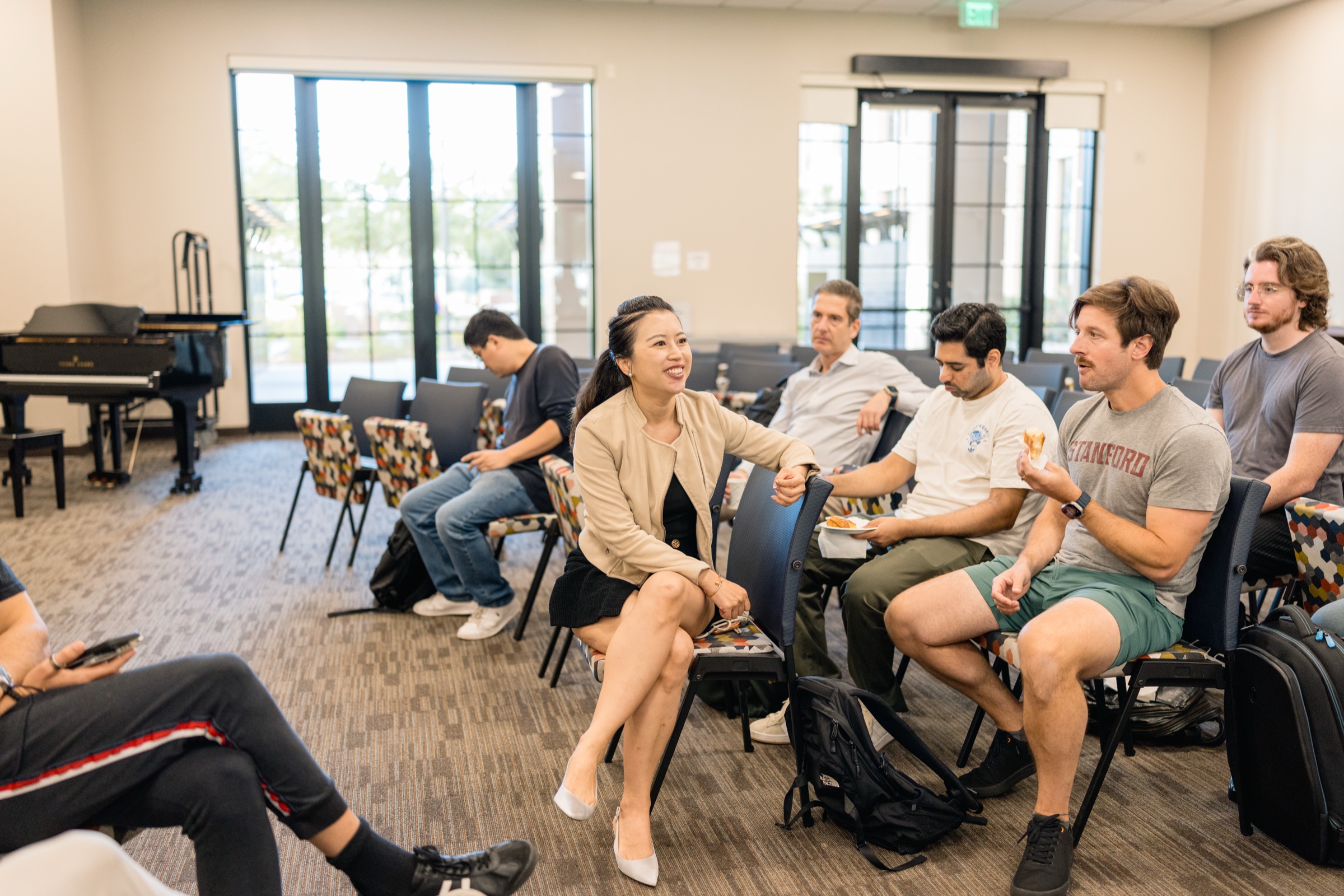
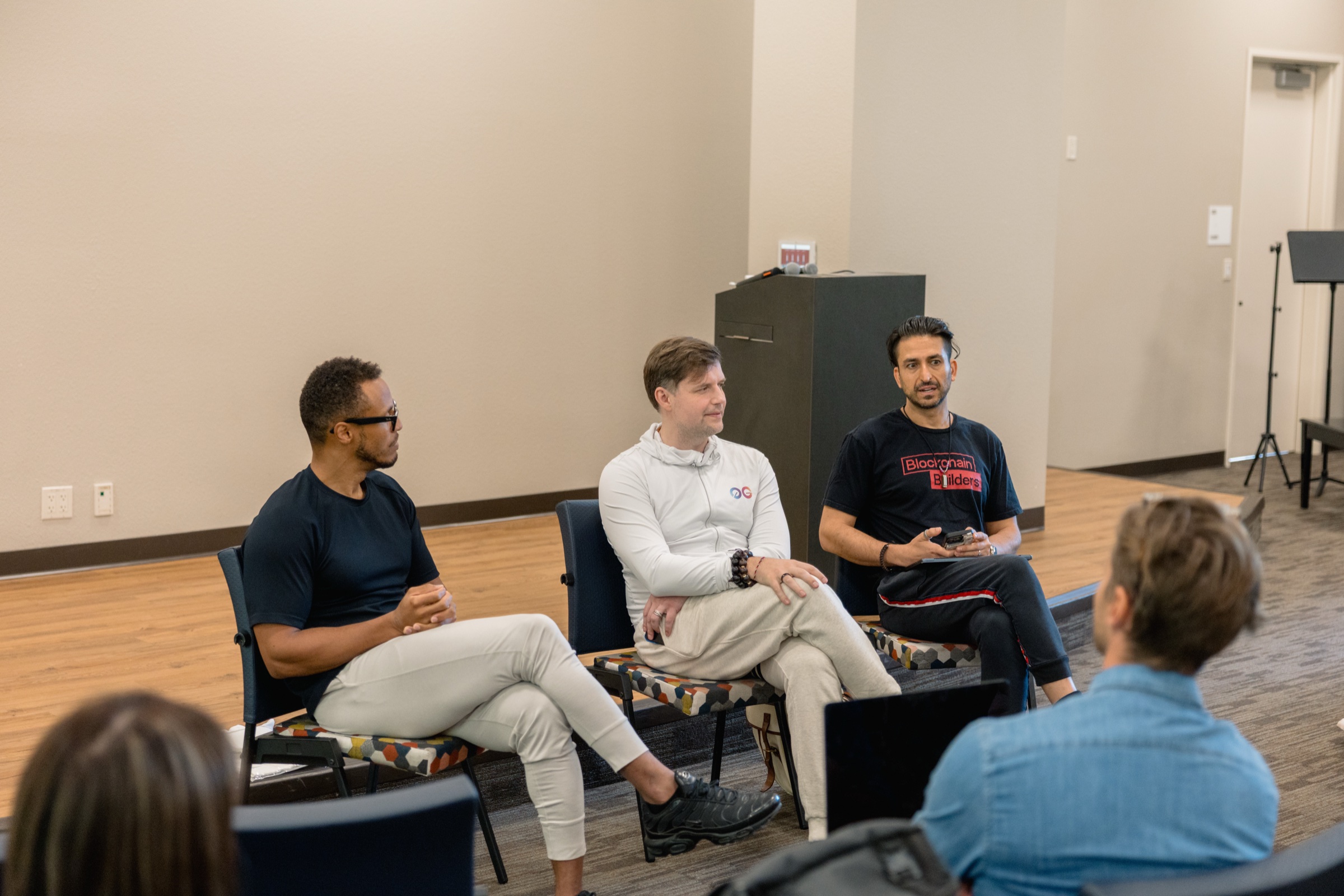
A working morning on GTM and fundraising
The day opened with a kickoff breakfast and an interactive panel on go-to-market and fundraising. No ceremony yet, no certificates. The founders spent their last official program hours on the two questions that follow every early-stage team out of an accelerator: who buys, and who invests.
Lunch with Google Cloud's Web3 team
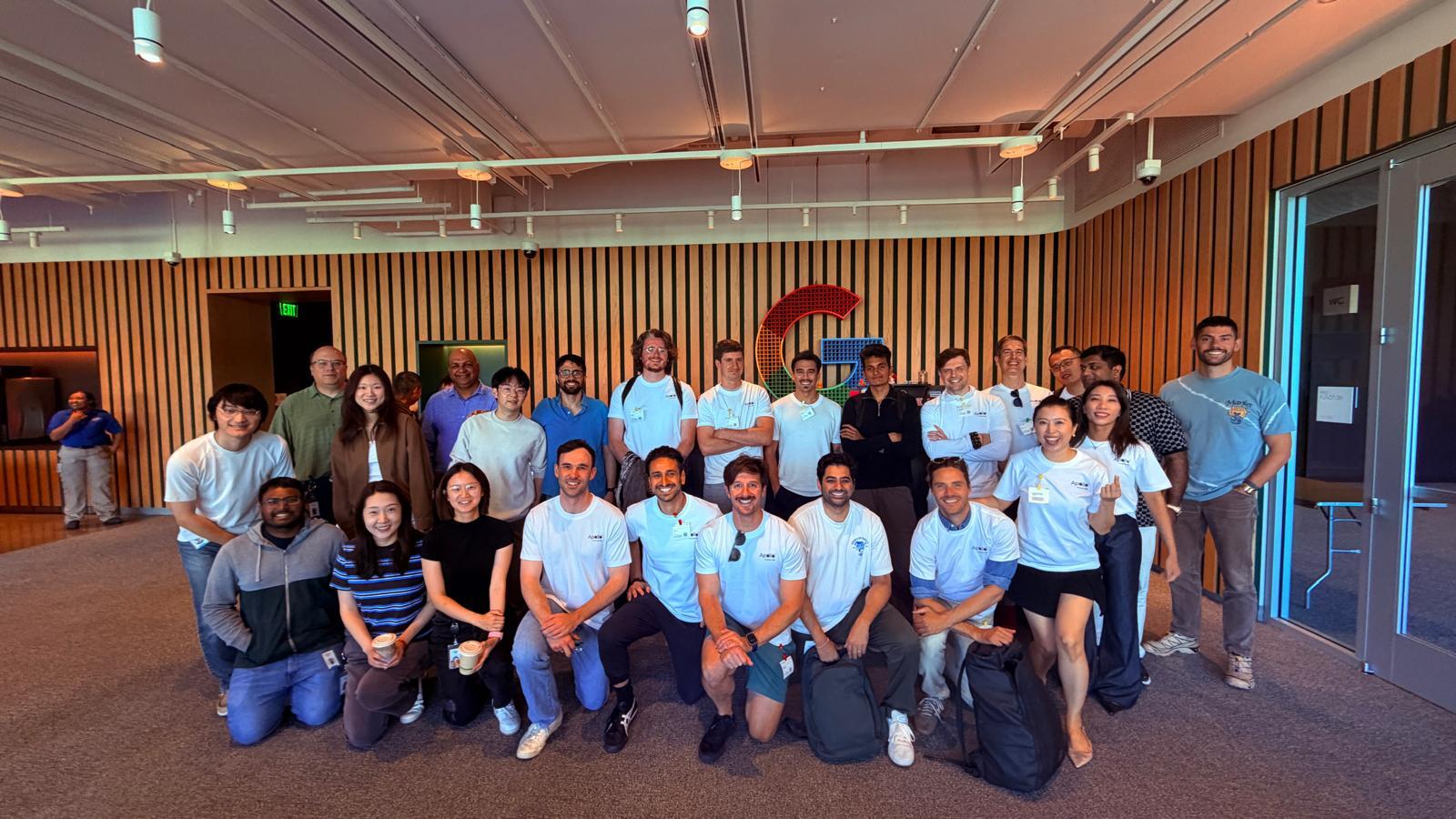
From Stanford, the cohort headed to the Google campus for a visit and lunch with Google Cloud's Web3 team. Google Cloud backed the program as a partner from the start, and the visit put the founders in the same room as the people evaluating what AI startups need from cloud and Web3 infrastructure.
Certificates on the Stanford campus
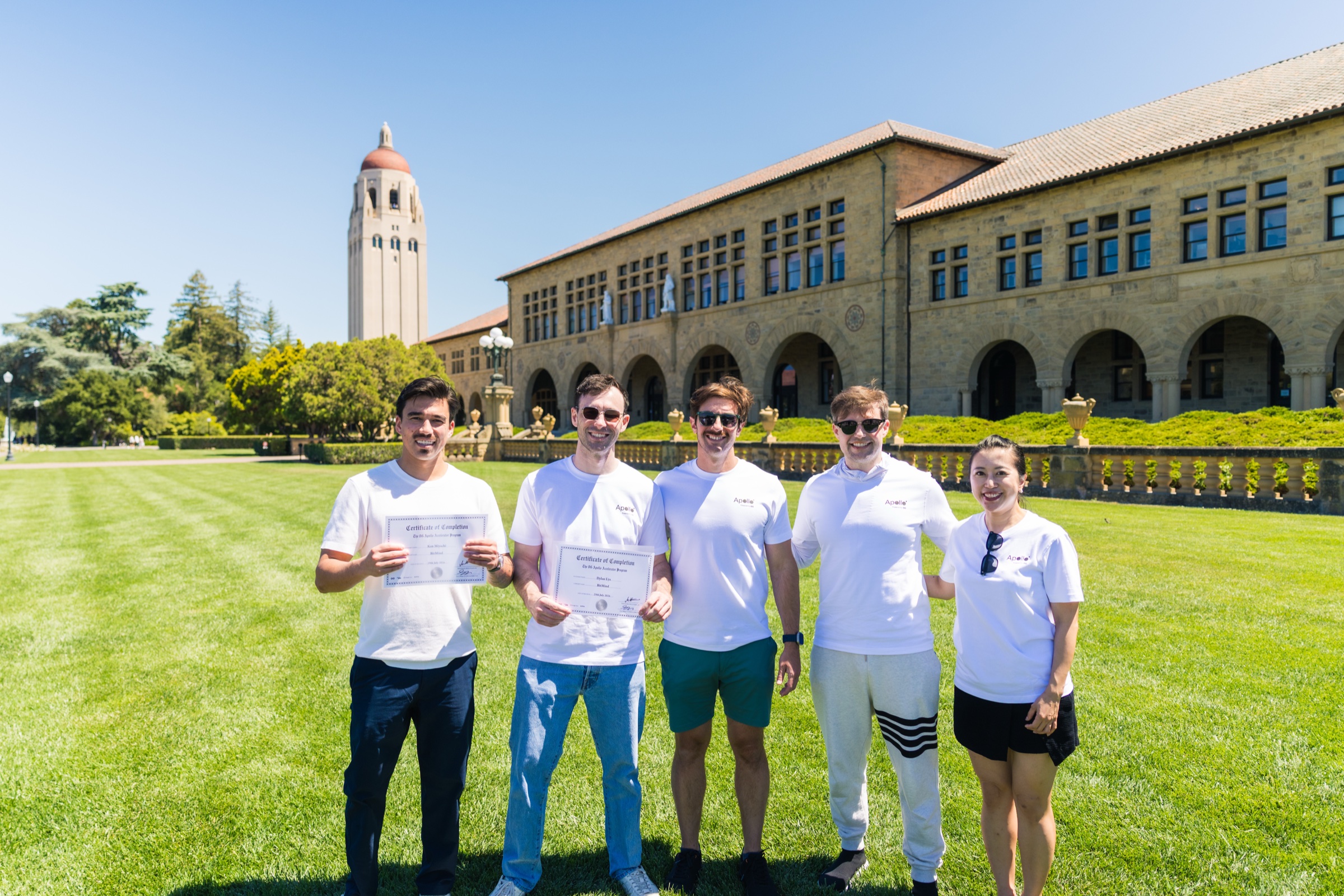
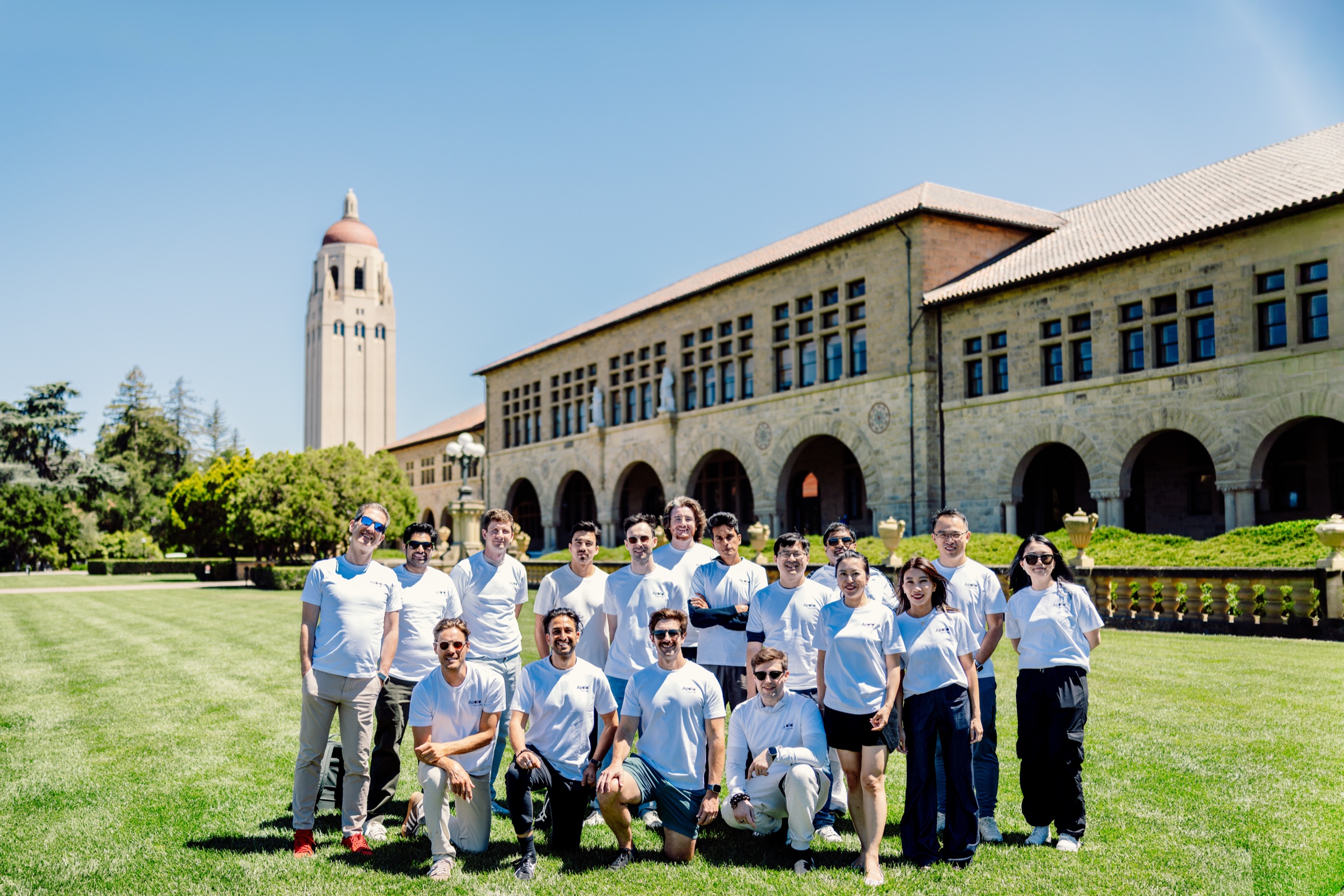
After lunch came the graduation ceremony. Each team collected its Certificate of Completion, and the cohort spread out across the Main Quad for photos. Ten weeks of late nights, pitch rehearsals, and integration sprints, closed out in front of Hoover Tower.
Dinner at Ettan
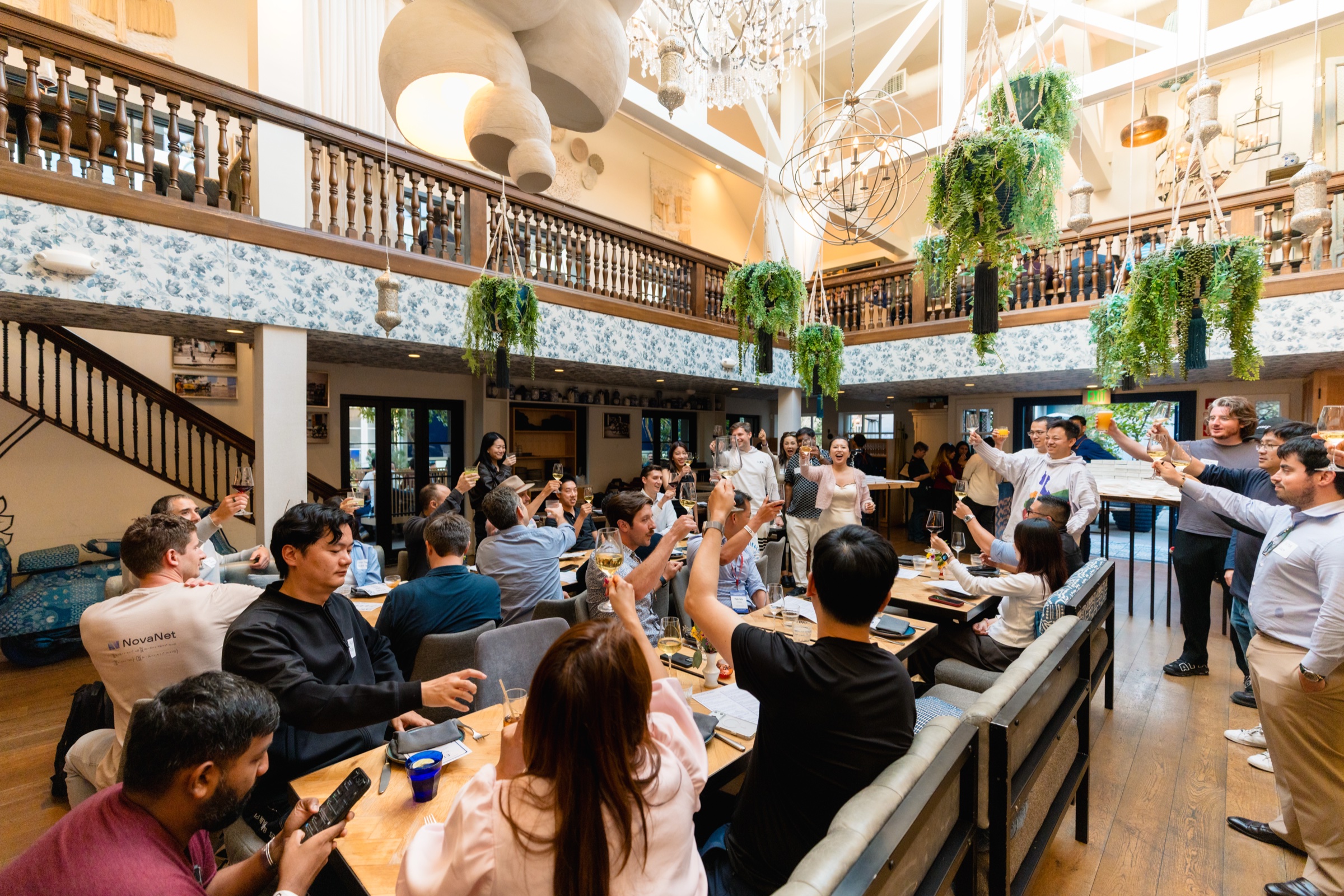
The evening closed at Ettan in Palo Alto: a graduation dinner connecting the ten teams with investors. Citizens Private Bank sponsored part of the dinner. Founders, mentors, and the 0G and BBF teams shared the room where the cohort's next conversations, the ones that started as intro requests after Demo Day, kept moving over dinner.
What the ten teams are building
The cohort covered a wide slice of applied AI, from media integrity to agent infrastructure:
| Company | What they build |
|---|---|
| BitMind | Real-time deepfake detection |
| DSALTA | AI-native automated compliance |
| Floe Labs | Spend and credit layer for AI agents |
| ICME Labs | Cryptographic guardrails for AI agents |
| Impulse AI | Autonomous ML engineering |
| Mighty | Multimodal AI fraud detection |
| Om Labs | Autonomous QA agents (Jina) |
| Pulsar Money | Crypto-native neobank |
| Walnut AI | Agentic professional networking |
| UV Labs | Financial reasoning training data |
We profiled every team in the cohort spotlight thread during the program.
Where the teams stand now
The graduation ceremony marked the end of the program, not the end of the story. Two weeks out, the numbers from the cohort's first exposure to the market:
- 100+ intro requests from investors, enterprises, and partners since Demo Day
- All ten teams received inbound interest, with founders now in follow-up meetings
- Five of the ten teams are already live on or integrating 0G across chain, storage, and compute
The integration number is the one we watch closest. Apollo was never a branding exercise; the point was teams shipping on 0G infrastructure because it solves a real problem for them. UV Labs put it plainly after their integration: "Integrating 0G took less than 30 minutes end-to-end and instantly saved us money & improved our value proposition."
Pulsar Money's read on the program itself, after Demo Day: "it was really well organized and appreciate a lot the efforts and support along the way."
Follow the arc
The full Apollo story played out on @0G_labs across the summer:
- Demo Day announcement (June 23)
- Demo Day recap (June 26)
- Cohort spotlight thread (June 29)
- Om Labs ships Jina (July 8)
- Traction update (July 10)
- Founders on the program (July 26)
- Graduation day (July 29)
- Michael Heinrich at the Blockchain Application Stanford Summit (August 7, session recording)
For the program itself: apollo.0g.ai
Frequently asked questions
What is the 0G Apollo Accelerator?
The Apollo Accelerator is a ten-week program for AI startups, run by 0G with Blockchain Builders Fund, led by Stanford veterans. Google Cloud and Privy are program partners. The inaugural 2026 cohort of ten teams graduated on July 29, 2026. Details at apollo.0g.ai.
What did the inaugural Apollo cohort achieve?
Since Demo Day on June 25, the cohort has pulled in 100+ intro requests from investors, enterprises, and partners. All ten teams received inbound interest, and five of the ten are already live on or integrating 0G across chain, storage, and compute.
What is 0G?
0G is the trust layer for AI. It combines private compute, encrypted storage, and an AI-native EVM L1 chain in one stack where AI work, from inference to agent actions, is verified and audited.
Where can I get 0G?
get.0g.ai is the interactive guide on how and where to acquire 0G tokens, with options for developers, investors, and ecosystem participants.
Where can I build on 0G?
Start at build.0g.ai for docs, starter kits, and the latest SDK. Visit 0g.ai/partners to browse the projects already shipping on the network.
Stay connected
Thank you to Blockchain Builders Fund, Google Cloud, Privy, and Citizens Private Bank for making the inaugural cohort what it was, and to the ten teams who did the actual building. Follow us on X (@0G_labs) | Website | Blog | Events calendar